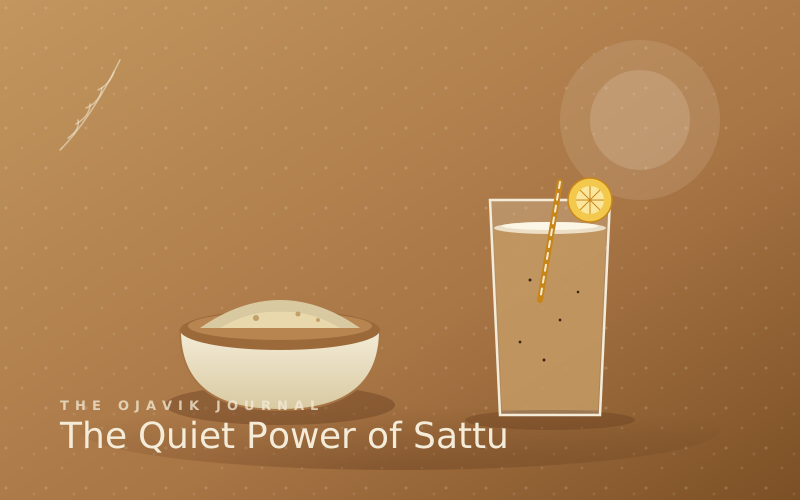
Long before whey protein became a supermarket staple, the farmers of Bihar were quietly mixing two tablespoons of sattu into a tall glass of cold water, adding a pinch of salt and lemon, and walking back to the fields. Three centuries later, food scientists are catching up to what they always knew.
Sattu is, by weight, one of the most protein-dense flours you can buy. A hundred grams delivers twenty-two and a half grams of complete plant protein, eighteen grams of fibre, and a glycaemic index low enough to keep a marathoner steady. There is no processing trick involved: just slow-roasted Bengal gram, stone-milled until it is the colour of pale honey.
Why the roasting matters
The first thing every home cook in Patna will tell you is that sattu lives or dies by the roast. Under-roast it and the starch stays grainy; over-roast it and the natural oils turn bitter. We roast our chana in shallow iron kadhais over a controlled flame, in batches of no more than thirty kilograms, until each grain has the deep nutty fragrance that tells you it is ready.
A drink, a meal, a balm
Sattu is rarely cooked. Mostly it is mixed: into water for the cooling summer sharbat, into curd for a refreshing lassi, into hot ghee and onions for a stuffing inside parathas. The Litti of Bihar, the Sattu drink of Punjab, the cooling laddoo of Bengal — the same flour, three regional personalities.
The genius of sattu is that the work is already done. The grain has been roasted and milled. You add cold water and you are eating.
The Ojavik way
Our sattu comes from a network of farmers in Bhagalpur and Munger. We buy the desi chana variety — smaller, darker, slower-growing than the kabuli — because it makes a finer, more aromatic flour. The grain is cleaned, roasted, stone-milled and packed within seventy-two hours of leaving the field. No additives, no anti-caking agents, no whitening.
Open a packet in May and you can still smell the roast.
Try it three ways
- Salted summer sharbat — 2 tbsp sattu, 250 ml cold water, pinch of salt, juice of half a lemon, pinch of roasted cumin powder.
- Sweet sattu drink — 2 tbsp sattu, 250 ml cold water or milk, 1 tbsp jaggery powder, a few crushed cardamom seeds.
- Litti-style stuffing — 4 tbsp sattu, 1 tbsp mustard oil, 1 chopped onion, green chillies, ajwain, lemon juice, salt. Stuff inside dough balls and cook on a fire.
Written by Aanya Sharma · Published 12 May 2026